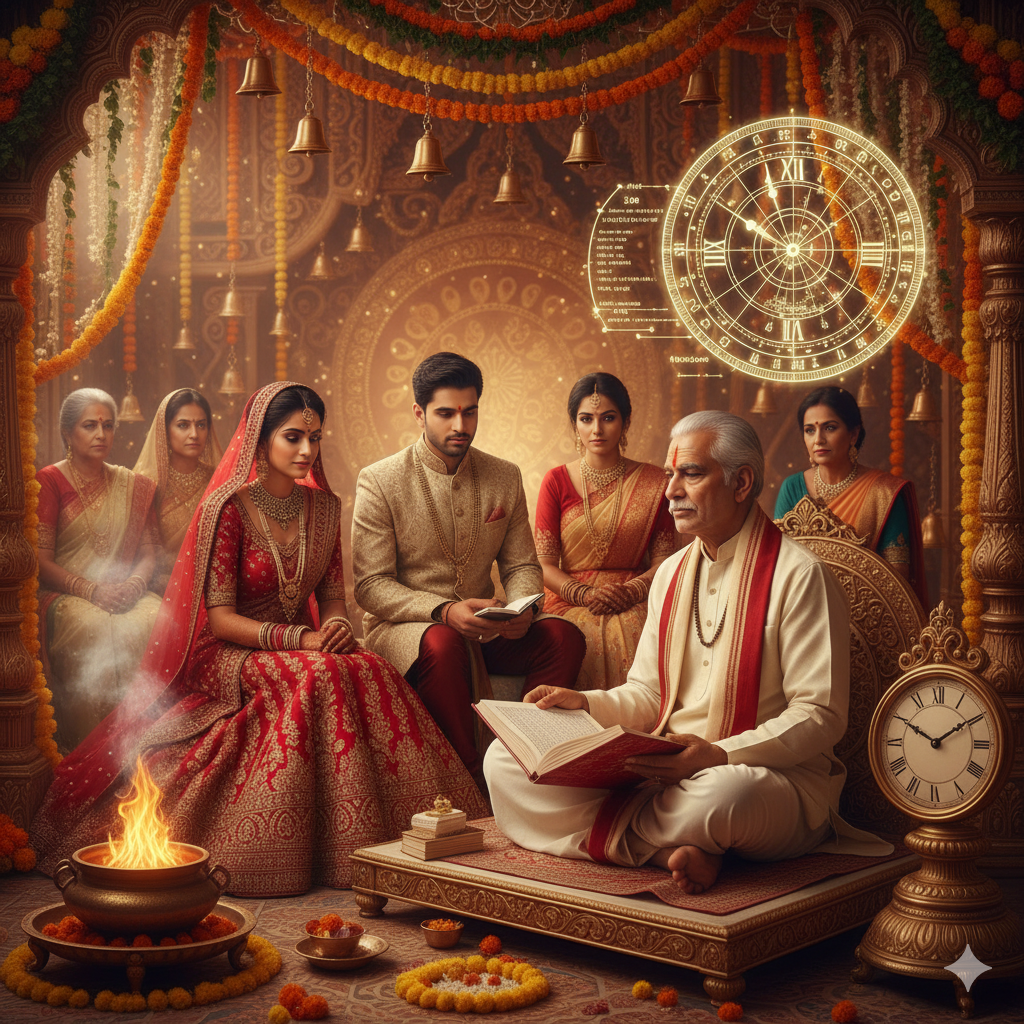

Marriage is one of the most cherished milestones in life, a
sacred union that symbolizes love, commitment, and the start of a new journey
together. Across cultures, rituals play a central role in this celebration, and
one tradition that stands out is the selection of an auspicious time, or muhurta,
to perform the wedding.
Far from being just a formality, the timing of marriage
rituals is believed to shape the harmony and success of married life. Let’s
explore why this practice holds such importance, drawing from history,
astrology, and modern-day traditions.
The Deeper Role of Marriage Rituals
Every culture has its unique ways of celebrating love, but
marriage rituals everywhere share a common essence—they mark the transition
into companionship and family. The rituals are not just symbolic; they are
believed to set the tone for the couple’s journey ahead. Choosing the right
time is thought to amplify the blessings and positivity surrounding the union.
A Tradition Rooted in History
The practice of selecting auspicious timings is not new.
Ancient civilizations across the world studied celestial movements to guide
important life events. In India, texts like Muhurta Chintamani outlined
detailed guidelines for selecting ideal times for weddings, highlighting how
deeply ingrained this belief has been through the ages.
Astrology and Marriage Timing
Astrology connects the stars to human destiny. When it comes
to weddings, astrologers carefully analyze planetary alignments to identify
moments charged with positive energy. This process—known in Vedic astrology as muhurta—is
believed to enhance compatibility, prosperity, and long-term harmony between
the couple.
To do this, astrologers study the birth charts of the bride
and groom, examine planetary positions, and choose dates and even specific
moments that align favorably with the couple’s stars.
The Lasting Impact of Auspicious Timing
The belief goes beyond just the wedding day. Couples who
marry during astrologically favorable times are thought to carry forward the
blessings into their married life, fostering trust, love, and resilience in the
relationship. The chosen timing is said to lay a positive foundation for the
years to come.
Cultural Variations Around the World
- Hindu
traditions: Astrologers play a central role in deciding the muhurta.
- Chinese
customs: Couples consult the Chinese calendar for favorable dates.
- Western
adaptations: Some people choose dates that align with numerology or
personal milestones.
Though methods differ, the belief in “right timing” is
universal.
A Personal and Spiritual Choice
For many couples, choosing an auspicious time isn’t just
about tradition—it’s a personal way of honoring their faith, heritage, and
connection with the cosmos. It gives them a sense of involvement in shaping
their marital destiny and adds a layer of spiritual meaning to their big day.
Modern Relevance
In today’s world, some may question whether choosing
auspicious times still matters. Yet for countless couples, astrology continues
to hold significance. With technology, it has become even easier to access
astrological insights—many now use online tools and apps to consult astrologers
and find the perfect timing for their marriage rituals.