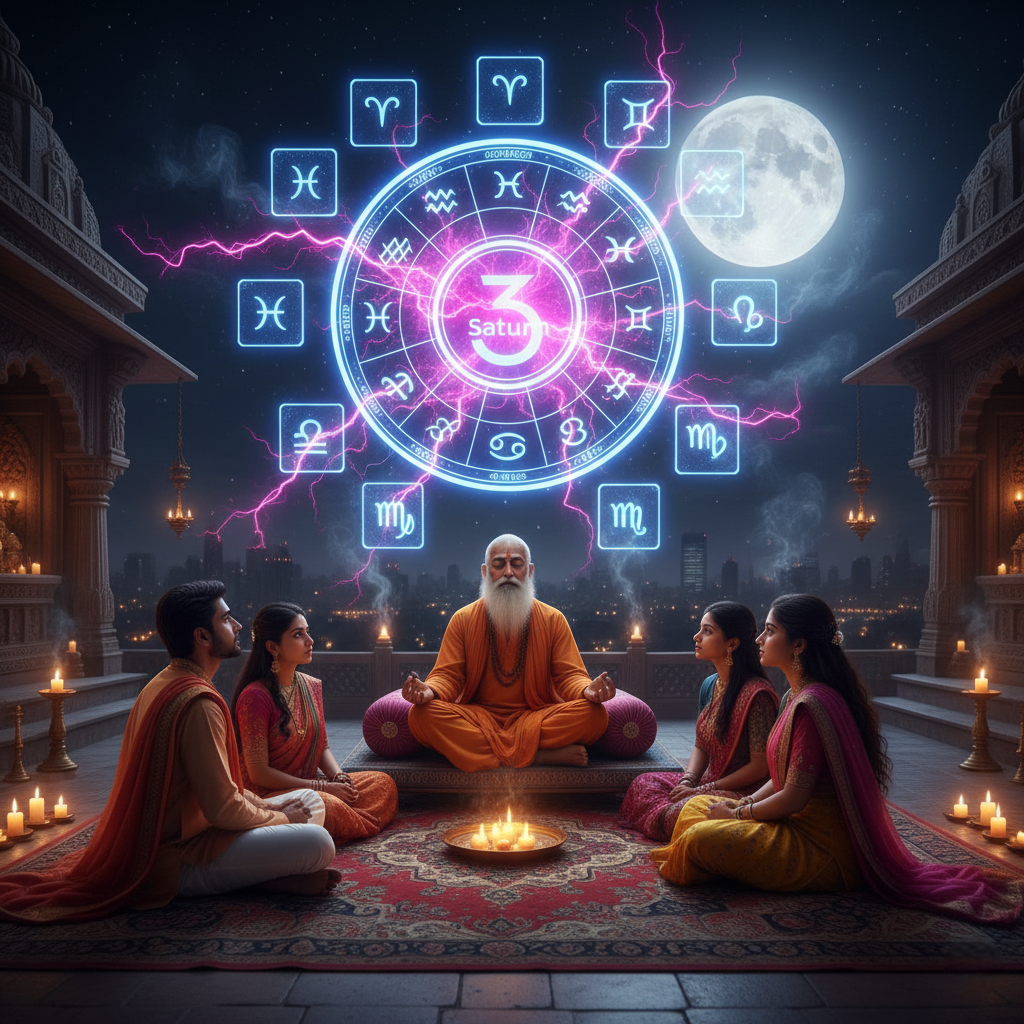
According to Vedic astrology, Parivartan
Rajyoga forms when two planets exchange the houses they rule. Think of it as planet
A sitting in the house governed by planet B, and planet B occupying the house
ruled by planet A. When this exchange happens, both planets behave as if they
are placed in their own houses. This strengthens their influence and amplifies
the significance of the houses involved.
Because each house carries its own
meaning, planets placed in their own domains tend to give clearer, stronger
results. In Parivartan Rajyoga, the planets begin to act in harmony, each
supporting the other. These exchanges are studied within the birth chart and
can create extremely powerful outcomes depending on which houses and planetary
lords are involved. Favorable house combinations can form many auspicious
yogas, making the chart stronger and more supportive.
Before understanding the types, it’s
important to know that this yoga can involve benefic or malefic houses, and its
impact changes accordingly. If the exchange involves beneficial houses, the
results are positive. If the exchange involves challenging houses, the outcomes
may lean towards obstacles and hardships. There are 66 possible combinations of
Parivartan Rajyoga, grouped into three main types.
The Significance of Parivartan Rajyoga
A Parivartan Rajyoga isn’t always
positive. Since both auspicious and inauspicious houses exist within a chart,
the outcome depends on the nature of the houses involved. If lords of favorable
houses exchange places, the yoga becomes beneficial. If lords of difficult
houses exchange places, the results may be adverse. Identifying the ruling
lords and their relationships is essential to interpreting the outcome
accurately.
What Parivartan Rajyoga Represents
The word Parivartan simply means
exchange. When two planets swap the signs they rule, the strongest form of
planetary connection is created. Their energies merge and influence both houses
equally. In essence, the planets begin to work through each other, taking on
each other’s nature and power.
In Vedic astrology, such an exchange
doesn’t just represent sign-swapping. It symbolizes a sharing of strength,
qualities, and karmic energy. Whenever this exchange happens, it forms a deep
link between the planets involved, causing them to function in unison
throughout the native’s life.
Types of Parivartan Rajyoga
Astrology classifies Parivartan Rajyoga
into three broad categories:
- Maha
Yoga (Great Exchange Yoga)
- Dainya
Yoga (Difficult Exchange Yoga)
- Khala
Yoga (Mixed or Neutral Exchange Yoga)
Each type carries distinct effects based
on the houses involved.
1. Maha Yoga
Maha Yoga forms when lords of the 1st,
2nd, 4th, 5th, 7th, 9th, 10th, and 11th houses exchange rulership. These houses
include the trikonas (1, 5, 9), the kendras (1, 4, 7, 10), and the two houses
related to wealth (2 and 11). There are 28 possible combinations in this category.
Since all participating houses are
auspicious, this exchange enhances the positive qualities of the chart. The
planets support each other and strengthen the overall potential.
Effects of Maha Yoga
This yoga brings exceptional outcomes.
When benefic planets are involved, the results are even more powerful, helping
the native achieve significant milestones. Even if malefic planets participate,
the yoga still produces noticeable benefits, though not as strong. Natives with
Maha Yoga tend to enjoy prosperity, success, recognition, and good fortune.
2. Dainya Yoga
Dainya Yoga arises when difficult
houses—specifically the 6th, 8th, or 12th—exchange lords with other houses.
These houses represent obstacles, debts, losses, and hidden challenges. A total
of 30 combinations fall under this category.
Dainya Yoga can also be subdivided into:
- Exchanges between hostile house lords
- Exchanges between mutual enemies (leading to Vipareeta
Rajyoga)
Effects of Dainya Yoga
This yoga often leads to hardships.
Natives may struggle with instability, mental stress, enmity, or unethical
tendencies. Life may feel challenging, with constant obstacles. In some cases,
especially in Vipareeta Rajyoga, early struggles eventually turn into
success—but usually at the cost of others or through unconventional paths.
3. Khala Yoga
Khala Yoga forms when the 3rd house lord
exchanges rulership with lords of the 1st, 2nd, 4th, 5th, 7th, 9th, 10th, or
11th houses. Since the 3rd house is not as harmful as the 6th, 8th, or 12th,
its results are mixed. There are 8 possible combinations.
Effects of Khala Yoga
This yoga produces fluctuating results.
The native may experience ups and downs in their pursuits, require extra effort
to achieve stability, and face delays. However, because the 3rd house also
represents courage and initiative, persistent effort often brings good
results—especially if benefic planets aspect the combination.
Nakshatra Parivartan
Another type of exchange is Nakshatra
Parivartan, which occurs when planets exchange their star lords instead of
their sign lords. Since nakshatras reflect subconscious patterns and past-life
karma, this exchange influences deeper emotional and psychological layers.
The results become especially noticeable
during the dashas of the planets involved, showing outcomes linked to the
nature of the nakshatras they exchange.
Does Parivartan Rajyoga Cancel Weakness?
If a planet is debilitated, afflicted,
or ruling challenging houses, an exchange can sometimes reduce or cancel its
weaknesses. In certain conditions, this exchange can neutralize negative
effects and strengthen the planet’s influence.
Is Parivartan Rajyoga Beneficial?
When formed through auspicious houses,
Parivartan Rajyoga becomes highly supportive and brings growth, success,
comfort, and overall stability. When formed through malefic houses, it may
produce struggle or intense karmic lessons.
Other Powerful Rajyogas That Can Transform Life
1. Neech Bhanga Rajyoga
This yoga forms when a debilitated
planet regains strength due to specific conditions. When this happens, the
planet not only recovers but often blesses the native with exceptional results,
leading to rise and recognition.
2. Gaj Kesari Rajyoga
Formed when Jupiter is positioned in a
kendra from the Moon. This yoga grants wisdom, wealth, respect, and social
influence.
3. Parashari Rajyoga
Created when trine and kendra house
lords connect. This gives financial stability, strong status, and prosperity.
4. Adhi Yoga
Formed when Mercury, Jupiter, and Venus
occupy the 6th, 7th, and 8th houses from the Moon. This yoga brings
intelligence, fame, and strong leadership qualities.
5. Budhaditya Yoga
Occurs when the Sun and Mercury sit
together. The native gains brilliance, authority, and mental sharpness.
6. Chamar Rajyoga
Forms when the ascendant lord is exalted
and placed in a kendra, supported by Jupiter. This yoga creates a learned,
skilled, and highly esteemed individual.
7. Dhana Yoga
Created when the lords of the 1st, 2nd,
5th, 9th, and 11th houses interact through conjunction or mutual aspect. These
combinations bring strong wealth and financial growth.
8. Akhanda Rajyoga
A rare yoga that grants authority,
dominance, and luxurious living. Formed when Jupiter rules specific houses from
the lagna or Moon.
How Rajyogas Help Remove Life Obstacles
Rajyogas introduce supportive energy in
a birth chart. Their presence can uplift a person during favorable planetary
periods, helping them overcome setbacks and embrace opportunities. When the
timing aligns, Rajyogas often act as turning points, guiding the individual
toward success, confidence, and long-term growth.
Parivartan Rajyoga is one of the most influential planetary exchanges in Vedic
astrology. Its effects depend entirely on the nature of the houses and planets
involved. When favorable houses exchange rulers, the native experiences
progress, recognition, and strength. When difficult houses exchange energy,
challenges may arise. Understanding these exchanges offers valuable insight
into one’s life path, potential, and karmic journey.